

Nutrition basics
Macros explained: protein, carbs and fat for training and fat loss
By The Solimans team · Yousri Soliman’s kitchen in Bali · Updated
Macros, short for macronutrients, are the three nutrients that give food its calories: protein, carbohydrate and fat. Protein and carbs have about 4 kcal per gram, fat has about 9. For most people who train, a simple setup works: get enough protein (roughly 1.6–2.2g per kg of bodyweight), eat enough fat for health (roughly 20–35% of calories), and fill the rest with carbs to fuel training. Your total calories decide whether you lose, maintain or gain weight; your macros shape what that weight is made of and how well you train.
This is general guidance. If you have diabetes, a kidney condition or any other medical issue, speak to a doctor or dietitian before changing how you eat.
What does each macro do?
| Macro | kcal per gram | Main job | Common sources |
|---|---|---|---|
| Protein | ~4 | Builds and repairs muscle, keeps you full | Chicken, fish, eggs, tempeh, tofu, yoghurt |
| Carbohydrate | ~4 | Fuels hard training and the brain | Rice, noodles, potatoes, oats, fruit, bread |
| Fat | ~9 | Hormones, vitamin absorption, long-lasting energy | Olive oil, nuts, avocado, eggs, fish |
| Alcohol (not a macro) | ~7 | None you need | Beer, wine, cocktails |
Protein
Protein is the macro most people under-eat. It repairs muscle after training, helps you hold on to muscle in a calorie deficit, and is the most filling of the three. See how much protein do you need for a table by bodyweight.
Carbohydrates
Carbs are your main fuel for high-intensity work like sparring, sprints, surfing or heavy lifting. Cutting them very low often makes hard sessions feel awful. Whole sources such as rice, potatoes, oats, fruit and vegetables also bring fibre.
Fat
Fat matters for hormones and absorbing fat-soluble vitamins. It is calorie-dense, which is why fried food and creamy sauces add up quickly. Most people do well keeping it somewhere around 20–35% of daily calories.
How do macros add up to calories?
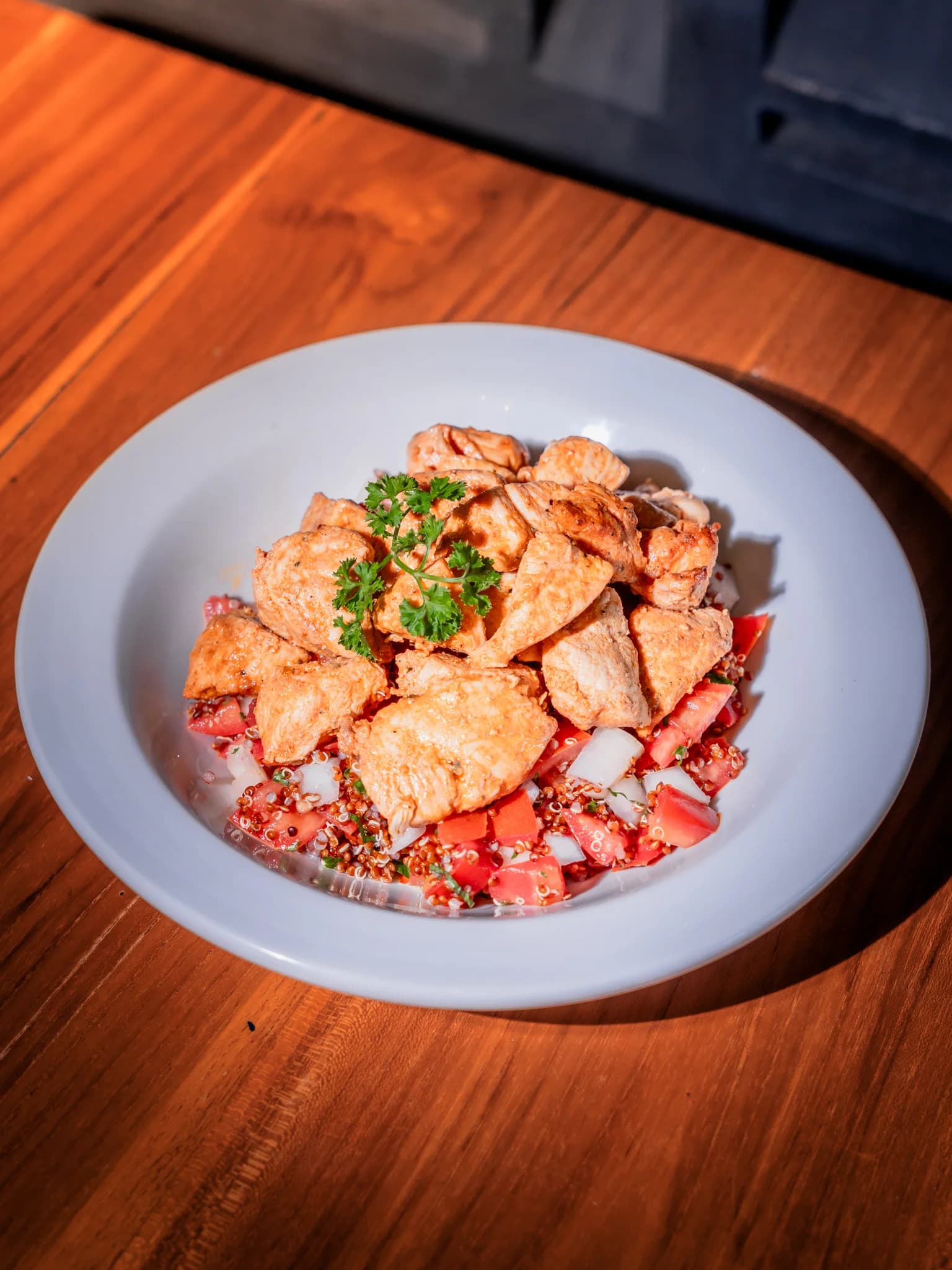
Multiply each macro by its calories per gram and add them up. Take the Chicken Tawook and Fattoush from The Solimans High Protein menu:
| Macro | Grams | Calculation | kcal | Share |
|---|---|---|---|---|
| Protein | 79g | 79 × 4 | 316 | 46% |
| Carbs | 38g | 38 × 4 | 152 | 22% |
| Fat | 24g | 24 × 9 | 216 | 32% |
| Total | 684 |
That matches the 684 kcal listed on the menu. Labels can be a few calories off this maths because of rounding and fibre, which is normal.
How should you set macros for your goal?
Start with calories, then set protein, then fat, then let carbs fill the rest.
| Goal | Calories | Protein | Fat | Carbs |
|---|---|---|---|---|
| Fat loss | ~300–500 kcal below maintenance | 1.8–2.2 g/kg | ~20–30% of calories | The rest |
| Maintenance | At maintenance | 1.6–2.0 g/kg | ~25–35% | The rest |
| Lean muscle gain | ~250–500 kcal above maintenance | 1.6–2.2 g/kg | ~20–30% | The rest, often higher |
| Heavy training (fight camp, endurance) | At or near maintenance | 1.6–2.2 g/kg | ~20–30% | Higher, to fuel sessions |
A worked example
A 75 kg person training four times a week, aiming for steady fat loss with an estimated maintenance of 2,400 kcal:
- Calories: 2,400 − 400 = 2,000 kcal.
- Protein: 2.0g × 75 kg = 150g = 600 kcal.
- Fat: 25% of 2,000 = 500 kcal ÷ 9 = about 55g.
- Carbs: 2,000 − 600 − 500 = 900 kcal ÷ 4 = 225g.
Result: roughly 150g protein, 225g carbs, 55g fat. Your real maintenance may differ, so watch your weight trend over two to three weeks and adjust. The calculator below does steps 1–4 for you.
How do the Solimans menus compare on macros?
The Solimans runs three menus with five meals a day each. Average macros per meal, from the full two-week menu:
| Menu | kcal | Protein | Carbs | Fat | Rough split (P / C / F) |
|---|---|---|---|---|---|
| Balanced | ~718 | 50g | 65g | 29g | 28% / 36% / 36% |
| High Protein | ~619 | 54g | 29g | 32g | 35% / 19% / 46% |
| Vegan | ~726 | 45g | 77g | 27g | 25% / 42% / 33% |
The High Protein menu is lower in carbs because many meals swap rice or noodles for shirataki, cauliflower rice or salad. The Balanced and Vegan menus carry more carbs for training fuel. You can mix menus day by day, for example a High Protein lunch with a Balanced dinner on a heavy training day.
Two extremes from the menu show how different meals can be:
| Meal | kcal | Protein | Carbs | Fat |
|---|---|---|---|---|
| Seafood Shirataki | 335 | 44g | 24g | 7g |
| Tempeh Pad Thai | 836 | 45g | 101g | 28g |
Almost the same protein, but the Pad Thai has about 500 kcal more, mostly from carbs. One suits a cut, the other a big training day.
High Protein684 kcal · 79g PChicken Tawook and Fattoush
Rp 100K
 High Protein640 kcal · 73g P
Mie Goreng Shirataki
Rp 100K
 High Protein654 kcal · 72g P
Pad Thai Chicken Shirataki
Rp 100K
 High Protein600 kcal · 72g P
Chicken Tawook and Tabbouleh
Rp 100K
 High Protein652 kcal · 68g P
Crunchy Salad
Rp 100K
 High Protein683 kcal · 67g P
Cauli Rices Chicken Satay
Rp 100K
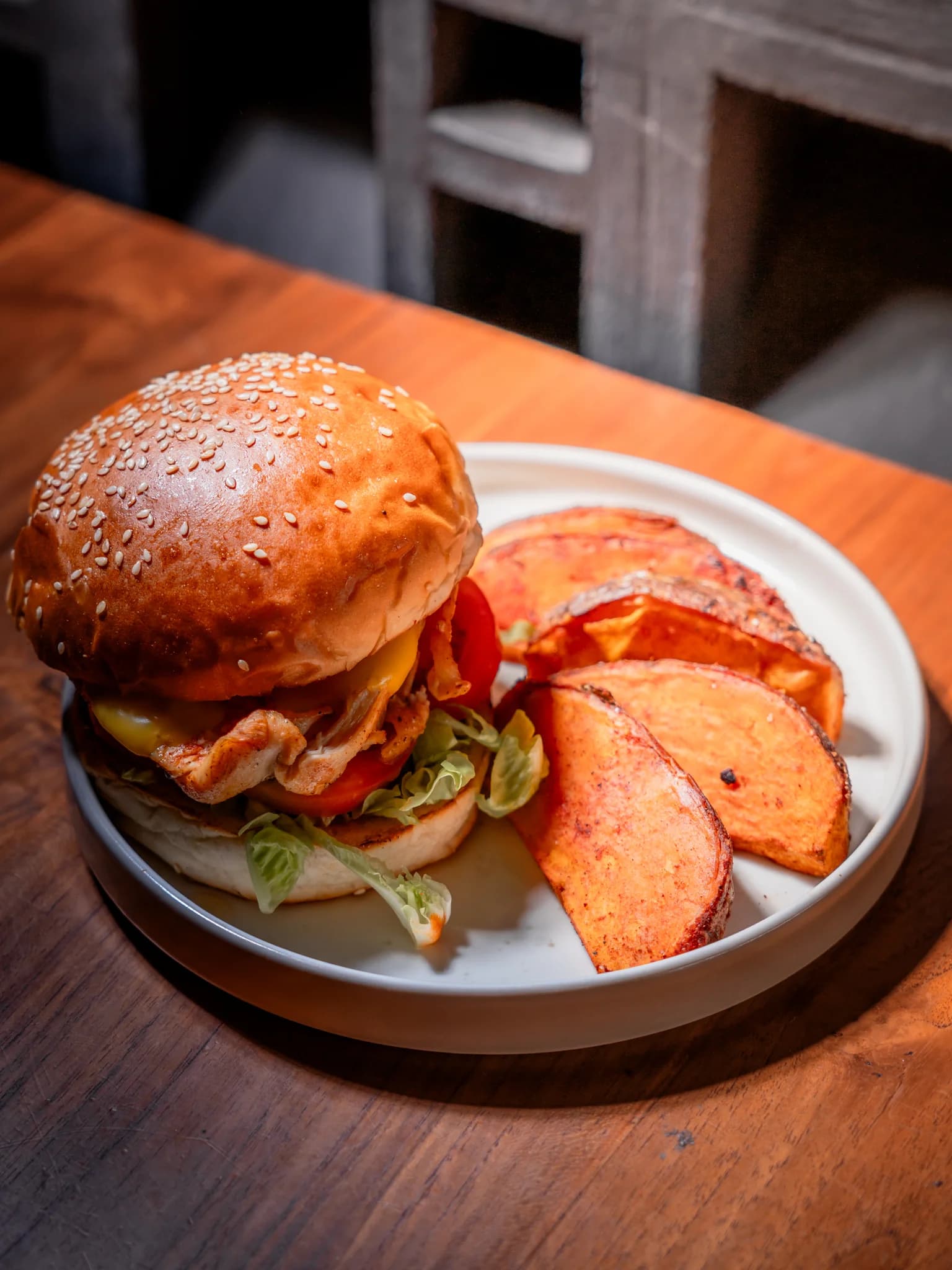 Balanced690 kcal · 66g P
Champion's Chicken Burger
Rp 100K
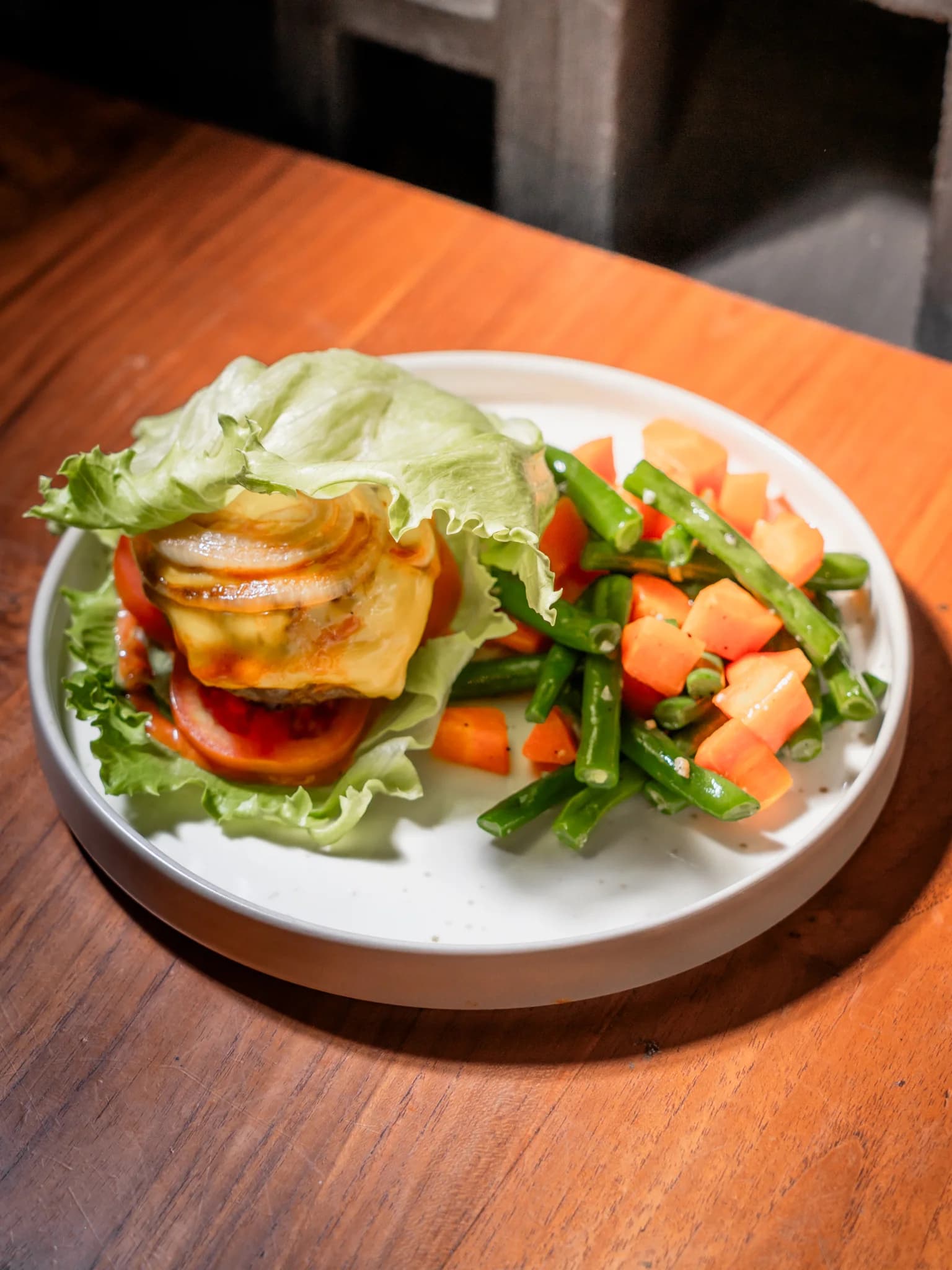 High Protein567 kcal · 65g P
Champion's Lettuce Chicken Burger
Rp 100K
What about fibre and micronutrients?
Macros aren't the whole story. Fibre (from vegetables, fruit, legumes and whole grains) helps digestion and fullness, and micronutrients such as iron, calcium and vitamin D matter for health and training. Two diets with identical macros can be very different in quality, so get most of your carbs and fats from whole foods, and eat plenty of vegetables and fruit.
Do you need to hit your macros exactly?
No. Aim to land within roughly 5–10g of your protein target and close to your calorie target most days. Carbs and fat can swing day to day as long as calories are about right. Consistency over weeks matters far more than precision on any single day.
Can you get your macros without counting?
Yes. Build meals around a palm-sized or larger serving of protein, add a fist or two of carbs on training days, include vegetables, and use fats sparingly when cooking. Or let someone else do the counting: every Solimans meal lists its kcal and macros, and a custom plan can be built around your exact numbers.
The short version
Protein builds, carbs fuel, fat supports. Set calories for your goal, lock in protein, keep fat reasonable and let carbs fill the gap. Then stay consistent.
Pick your meals for the week
15 meals a day across Balanced, High Protein and Vegan, every one with photos, price and macros. Delivered Monday to Saturday in Canggu & Pererenan.
Check this week's menu for every meal's macros, or build your week around your numbers.
Questions
What are macros?+
Macros, short for macronutrients, are protein, carbohydrate and fat: the three nutrients in food that provide calories. Alcohol also provides calories but isn't counted as a macro you need.
How many calories are in a gram of protein, carbs and fat?+
Protein and carbohydrate both have about 4 kcal per gram, fat has about 9 kcal per gram, and alcohol about 7 kcal per gram.
What is the best macro split for fat loss?+
There isn't one perfect ratio. Keep protein high (around 1.6–2.2g per kg), eat in a moderate deficit of roughly 300–500 kcal a day, keep fat at a reasonable minimum and fill the rest with carbs you enjoy and train well on.
Do I need to count macros?+
No, but it helps if you have a specific goal and aren't getting results by feel. Many people track for a few weeks to learn portion sizes, then eat more intuitively.
Are carbs bad for fat loss?+
No. Fat loss comes from an overall calorie deficit. Carbs fuel hard training, so people doing Muay Thai, CrossFit or heavy lifting often feel and perform better with plenty of them.
Where can I see the macros of Solimans meals?+
On every meal on the menu: each one lists kcal, protein, carbs and fat, and your weekly totals update as you build your plan.