

Guide to fat loss in Bali
Cutting in Bali: how to lose fat without losing muscle
By The Solimans team · Yousri Soliman’s kitchen in Bali · Updated
To cut in Bali without losing muscle, eat about 300–500 kcal a day below maintenance, keep protein high (around 1.6–2.2 g per kg of bodyweight), and keep lifting weights. The tricky part here is not the theory but the lifestyle: sunset drinks, smoothie bowls and long café brunches make it easy to eat far more than you think. This guide covers the numbers, how to stay full, the common traps, and a real example day from our menu.
This is general information, not medical advice. If you have a medical condition, are pregnant, or have a history of disordered eating, please speak to a doctor or dietitian before dieting.
How big should your calorie deficit be?
Start by estimating maintenance, the calories that keep your weight steady.
Then subtract a moderate amount:
| Deficit | Daily change | What to expect |
|---|---|---|
| Small | ~300 kcal | Slower, easier to sustain, good for leaner people |
| Moderate | ~500 kcal | A common default for most people |
| Aggressive | 500+ kcal | Harder to keep muscle, energy and training quality |
Track your weight trend over two to three weeks rather than reacting to single days, because water, salt and digestion move the scale around. If nothing has changed after a few weeks, reduce intake a little or add some daily walking. Everyone responds differently, so treat any estimate as a starting point.
Why protein matters most on a cut
When you eat less, your body is more likely to lose muscle along with fat. Two things protect it: lifting weights and eating enough protein. Mainstream guidance for people who train is about 1.6–2.2 g of protein per kg of bodyweight a day, and many people sit at the upper end during a cut. Protein is also the most filling macronutrient, which helps a lot when calories are lower. Our guide on how much protein you need has a full table by bodyweight.
How do you stay full in a calorie deficit?
- Build meals around protein. A 50–70 g protein meal keeps most people satisfied far longer than a carb-heavy one of the same calories.
- Add volume. Salads, vegetables and swaps like shirataki noodles or cauliflower rice let the portion stay big while calories drop.
- Eat at regular times. Long gaps tend to end in a large, unplanned meal.
- Drink water. In Bali's heat, thirst is easily mistaken for hunger. Keep a bottle with you.
- Sleep. Short sleep tends to push appetite up the next day.
Low-calorie, high-protein meals from our menu
The showcase below shows every dish at 550 kcal or less with at least 40 g of protein, sorted by protein:
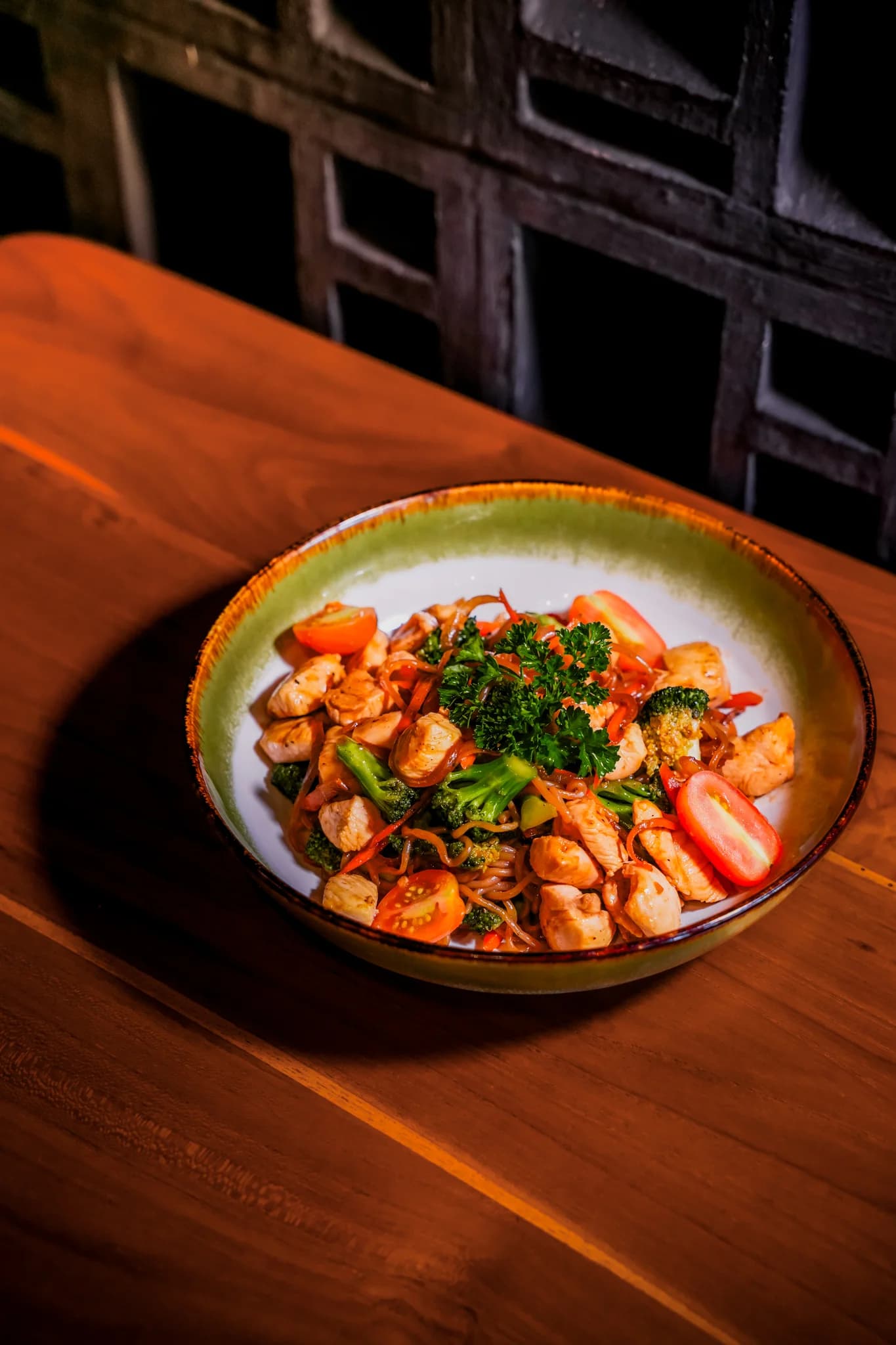 High Protein518 kcal · 57g P
Shirataki Chicken Stir Fry
Rp 100K
High Protein446 kcal · 56g PFit Parmigiana and Napoletana Shirataki
Rp 100K
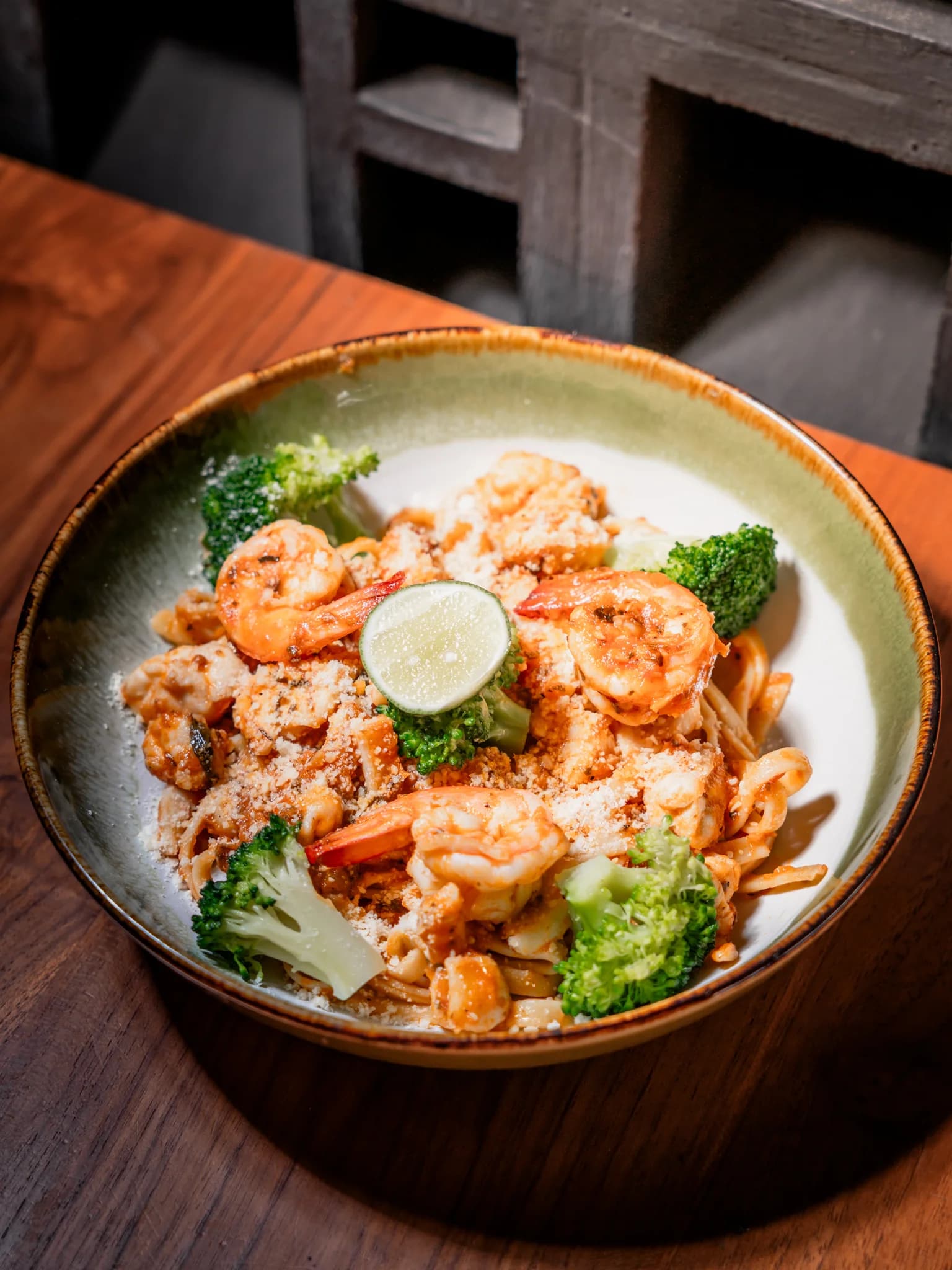 Balanced545 kcal · 53g P
Seafood Pasta
Rp 100K
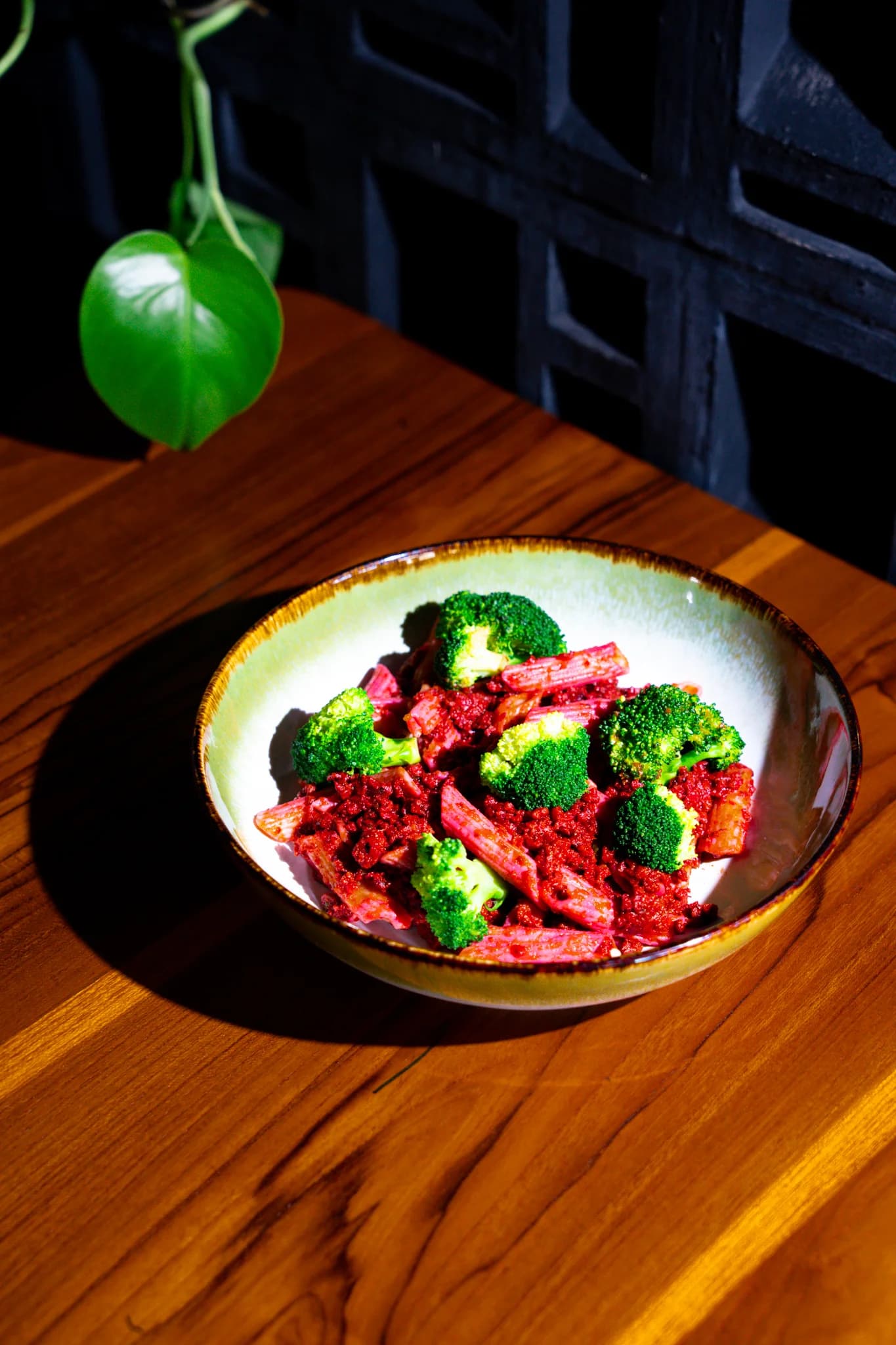 Vegan511 kcal · 47g P
Bolognese Pasta GF
Rp 90K
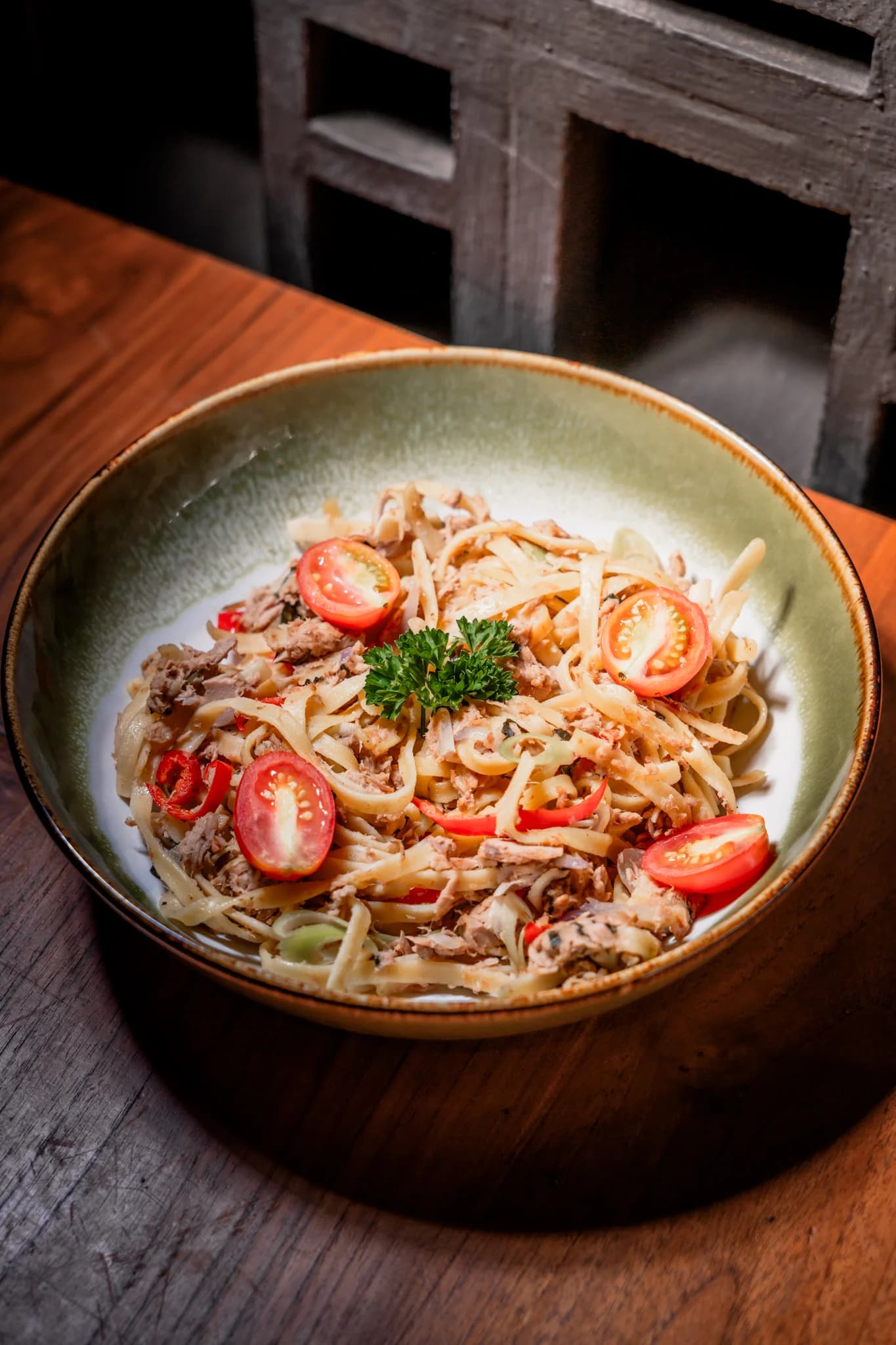 Balanced505 kcal · 45g P
Chili Tuna Pasta
Rp 100K
 High Protein335 kcal · 44g P
Seafood Shirataki
Rp 100K
 Vegan512 kcal · 44g P
Penne Chicken Pasta
Rp 90K
 High Protein482 kcal · 42g P
Poke Bowl Tuna Mango
Rp 100K
| Dish | kcal | Protein | Carbs | Fat | Price |
|---|---|---|---|---|---|
| Shirataki Chicken Stir Fry | 518 | 57 g | 32 g | 18 g | Rp 100K |
| Fit Parmigiana and Napoletana Shirataki | 446 | 56 g | 15 g | 18 g | Rp 100K |
| Seafood Pasta | 545 | 53 g | 63 g | 9 g | Rp 100K |
| Seafood Shirataki | 335 | 44 g | 24 g | 7 g | Rp 100K |
| Poke Bowl Tuna Mango | 482 | 42 g | 38 g | 18 g | Rp 100K |
Most of these are on our High Protein plan, which averages about 619 kcal, 54 g protein and only 29 g of carbs per meal.
A real cutting day from The Solimans menu
Here is Wednesday of Week 2 on the High Protein plan. All four dishes are on the menu that day; pick the three mains for a lighter day, or add breakfast if you need more.
| Meal | Dish | kcal | Protein | Carbs | Fat | Price |
|---|---|---|---|---|---|---|
| Lunch | Fit Parmigiana and Napoletana Shirataki | 446 | 56 g | 15 g | 18 g | Rp 100K |
| Afternoon | Lettuce Beef Burger | 448 | 42 g | 16 g | 24 g | Rp 125K |
| Dinner | Chicken Kebab with Baladi | 593 | 59 g | 33 g | 25 g | Rp 100K |
| 3-meal total | 1,487 | 157 g | 64 g | 67 g | Rp 325K | |
| + Breakfast | Scrambled Eggs Lean Meat | 653 | 57 g | 14 g | 41 g | Rp 100K |
| 4-meal total | 2,140 | 214 g | 78 g | 108 g | Rp 425K |
For a smaller budget, two meals from Wednesday of Week 1 work well: Seafood Shirataki and Chicken Tawook Tabbouleh total 935 kcal and 116 g of protein for Rp 200K, leaving room for a sensible breakfast and some fruit.
Low-carb days are not required for fat loss; total calories matter most. If you train hard, you may feel better mixing in a Balanced meal on heavy days.
Pick your meals for the week
15 meals a day across Balanced, High Protein and Vegan, every one with photos, price and macros. Delivered Monday to Saturday in Canggu & Pererenan.
The Bali traps: alcohol, smoothie bowls and brunch
None of these are off limits. They are just easy to underestimate. Numbers for food outside our kitchen are rough estimates and vary a lot by venue and portion.
| Item | Rough calories (approx.) | Why it catches people out |
|---|---|---|
| Large bottle of local lager | Roughly 250 kcal | Two or three at sunset is a meal's worth |
| Cocktail | Often around 200–350 kcal | Syrups, juice and cream add up |
| Café smoothie bowl | Often around 400–700 kcal | Toppings add calories; protein is usually low |
| Big café brunch plate | Can be 800+ kcal | Bread, butter, sauces and sides |
Alcohol has a double cost: the drinks themselves, then the late-night food and the poor sleep that follow. You don't need to stop completely, but planning your drinking nights, and having a meal plan to fall back on the next day, helps a lot. For Indonesian dishes, our guide to calories in Indonesian food gives approximate ranges, and staying lean on holiday in Bali covers shorter trips.
How do you eat out on a cut in Bali?
You don't need to avoid warungs or restaurants. A few simple habits help:
- Pick grilled over fried. Grilled chicken or fish (ayam bakar, ikan bakar) and sate are usually lighter choices than fried dishes, though portions and cooking oil vary a lot.
- Watch the rice and sauces. A large mound of rice and generous peanut or coconut sauces can add more than the protein itself. Ask for less rice if you want.
- Add protein where you can. An extra egg, tempeh or tofu makes a plate more filling.
- Decide before you arrive. Look at the menu in advance and choose your meal before you are hungry.
All calorie numbers for food outside our kitchen are estimates. Our guide to calories in Indonesian food gives rough ranges for common dishes.
How to keep muscle while cutting
- Keep lifting with the same intent; don't switch to only light, high-rep work.
- Keep protein high every day, not just on training days.
- Keep the deficit moderate, especially if you are already lean.
- Expect some strength dips late in a cut; that is normal.
- Plan diet breaks or maintenance weeks if you are cutting for a long time.
Ready to start?
Our weight loss meal plan page brings the lightest, highest-protein dishes together. Build your week with at least 2 meals a day for 5–7 days, mix plans as you like, and pause or cancel with 24 hours' notice. You can check every dish's macros on this week's menu before you choose.
Questions
How big should my calorie deficit be to lose fat?+
A deficit of about 300–500 kcal a day below maintenance is a common, sustainable starting point. Bigger deficits make it harder to keep muscle, train well and stick with the plan.
How much protein should I eat on a cut?+
Mainstream guidance for people who train is around 1.6–2.2 g of protein per kg of bodyweight per day, and many people aim for the higher end while cutting to help protect muscle and stay full.
Are smoothie bowls good for weight loss?+
They can fit, but many café smoothie bowls are larger in calories and lower in protein than people expect once granola, nut butter and honey go on top. Treat one as a full meal, not a snack.
Can I drink alcohol and still lose fat in Bali?+
You can, within your calorie target, but drinks add up quickly and can lead to late-night eating and poor sleep. Many people find that cutting back to one or two nights a week makes the biggest difference.
What are the lowest-calorie meals at The Solimans?+
Our lightest dishes include Bolognese Shirataki (308 kcal, 30 g protein), Seafood Shirataki (335 kcal, 44 g protein) and Grill Barramundi with Tabbouleh (398 kcal, 35 g protein).
Do you guarantee weight loss?+
No. We give you accurate, portioned meals with calories and macros listed. Results depend on your total intake, activity, sleep and health. If you have a medical condition, speak to a doctor or dietitian first.
Keep reading
- Cutting, without the guessworkWeight loss meal plan in Bali
- More protein, fewer carbsHigh protein meal prep in Bali
- Holiday nutritionHow to stay lean on holiday in Bali (without missing out)
- Nutrition guideCalories in Indonesian food: nasi goreng, mie goreng, satay and more
- Protein basicsHow much protein do you need? A simple guide with examples